Capacity Assessment in the Greater Edmonton Area: Expert Services by Mukesh Mishra
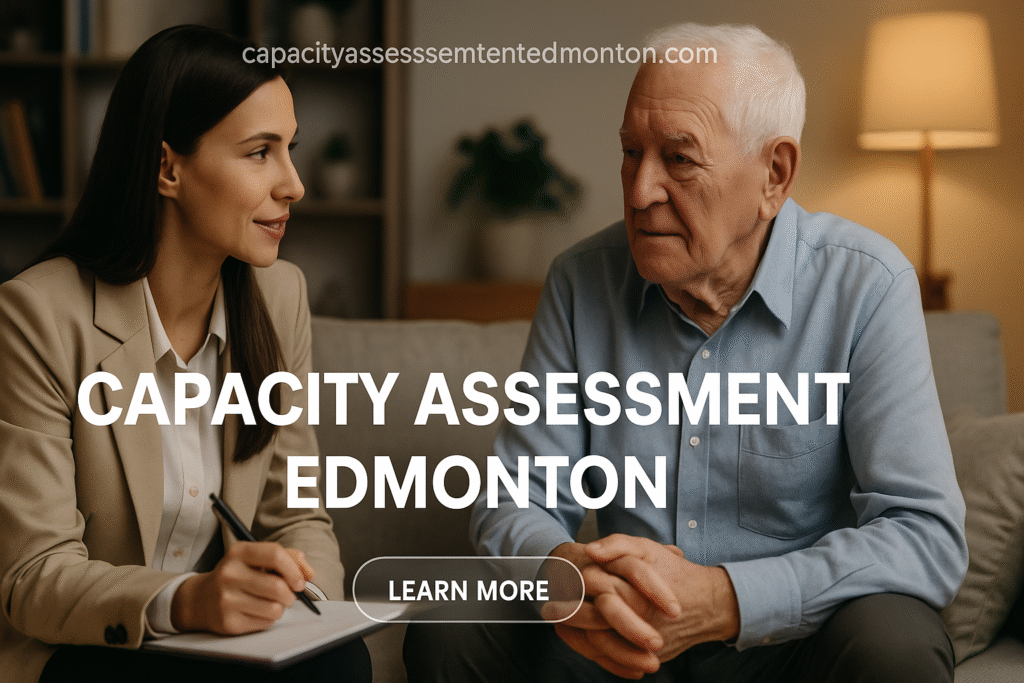
Welcome to Capacity Assessment Edmonton, your trusted provider of professional capacity assessment services in the Greater Edmonton Area. Led by Mukesh Mishra, a Designated Capacity Assessor (DCA), Registered Clinical Social Worker (RCSW), and Master of Social Work (MSW) holder, we specialize in delivering timely, accurate, and court-recognized evaluations to support families, healthcare providers, and legal professionals. Whether you’re dealing with age-related cognitive decline, mental health challenges, or developmental disabilities, our services ensure that decisions about guardianship, trusteeship, or co-decision-making are made with the utmost respect and compliance under Alberta’s Adult Guardianship and Trusteeship Act (AGTA).
In today’s aging society, capacity assessments have become increasingly vital. With Edmonton’s population growing and diversifying, the need for reliable mental capacity evaluations in areas like St. Albert, Sherwood Park, Leduc, and beyond is more pressing than ever. Our no-waitlist policy, affordable pricing starting at $500 CAD, and flexible mobile/in-home options make us the go-to choice for capacity assessment in Greater Edmonton. In this comprehensive guide, we’ll delve deep into what capacity assessments entail, why they’re essential, the detailed process involved, our specialized services, and how we stand out in promoting well-being for individuals and families across Alberta.
What is a Capacity Assessment? A Detailed Overview
A capacity assessment, often referred to as a mental capacity evaluation, is a formal process used to determine whether an adult has the cognitive and decisional ability to make informed choices about their personal or financial affairs. In Alberta, Canada, this is governed by the Adult Guardianship and Trusteeship Act (AGTA), which presumes that all adults (18 years and older) have decision-making capacity unless proven otherwise through a structured assessment.
Realistically, capacity isn’t a black-and-white concept. It’s domain-specific, meaning someone might have capacity in one area (e.g., choosing daily meals) but lack it in another (e.g., managing complex finances). This nuance is critical, as flawed assumptions about capacity can lead to unnecessary restrictions on autonomy or, conversely, risky decisions without proper safeguards. For instance, common flaws in informal assessments by family members include bias from emotional involvement or lack of standardized tools, which can result in inaccurate conclusions. Professional assessors like Mukesh Mishra mitigate these by using evidence-based methods, ensuring objectivity and legal validity.
In the Greater Edmonton Area, where urban and rural lifestyles intersect, capacity issues often arise from conditions such as dementia, Alzheimer’s disease, stroke, traumatic brain injuries, intellectual disabilities, or severe mental illnesses like schizophrenia. According to Alberta Health Services, thousands of such assessments are conducted annually, highlighting the prevalence of these challenges in our community.
To critique the system realistically: While the AGTA provides a robust framework, it’s not without flaws. The process can be time-consuming and emotionally taxing for families, and access to assessors in remote areas around Edmonton (e.g., Morinville or Gibbons) can be limited. That’s where our mobile services shine, bridging gaps and reducing wait times that plague public systems like the Regional Capacity Assessment Team. Furthermore, costs can be a barrier, but our transparent pricing—$700 CAD for combined guardianship and trusteeship assessments—makes it more accessible than many alternatives, which often exceed $1,000.
Delving deeper, a capacity assessment evaluates two key elements: understanding information relevant to the decision and appreciating the foreseeable consequences. This is not a mere IQ test; it’s a holistic review incorporating medical history, interviews, and sometimes collateral input from family or doctors. In Alberta, only Designated Capacity Assessors (DCAs) approved by the Office of the Public Guardian and Trustee (OPGT) can perform these for court purposes, ensuring high standards. Mukesh Mishra, with his extensive background in social work, brings a compassionate lens to this, focusing on empowerment rather than deficit.
Analyzing trends in Edmonton, the demand for capacity assessments has surged with an aging population. Statistics from the Government of Alberta indicate that over 20% of Edmontonians are seniors, many facing cognitive impairments. This underscores the need for proactive services like ours, which not only assess but also educate families on alternatives like supported decision-making before full guardianship is pursued.
Why is a Capacity Assessment Needed in the Greater Edmonton Area?
In the bustling Greater Edmonton Area, encompassing vibrant cities like Edmonton, St. Albert, and Sherwood Park, life moves fast—but cognitive challenges don’t discriminate. A capacity assessment becomes necessary when there’s reasonable belief that an adult cannot safely manage their affairs, potentially leading to exploitation, neglect, or poor health outcomes.
Common scenarios include elderly parents with dementia forgetting to pay bills, leading to financial distress; adults post-stroke struggling with healthcare decisions; or individuals with developmental disabilities needing support for housing choices. Without assessment, families risk legal complications, such as invalid wills or unauthorized medical treatments.
Critiquing the societal context: There’s a stigma around capacity loss, often viewed as a failure rather than a natural part of life. This can delay assessments, exacerbating issues. Realistically, early intervention prevents crises—our urgent assessment service addresses this by offering priority scheduling for time-sensitive cases, like impending surgeries or estate disputes.
From a business promotion standpoint, choosing Capacity Assessment Edmonton means partnering with a local expert who understands Edmonton’s unique demographics. Mukesh Mishra’s experience spans diverse communities, from urban professionals in downtown Edmonton to rural residents in Spruce Grove. We promote not just assessment but holistic support, including referrals to resources like Alberta Health Services or legal aid.
Analyzing flaws in DIY approaches: Many try informal evaluations, but these lack legal weight and can be challenged in court. Professional assessments provide Form 4, a standardized report that’s indispensable for AGTA applications. Our reports are meticulously prepared, often accepted without revisions, saving clients time and money.
In-depth benefits: Beyond legality, assessments foster family discussions, clarify roles, and preserve dignity. In Greater Edmonton, where healthcare access varies, our in-home options reduce stress for mobility-challenged clients, promoting equity.

The Capacity Assessment Process: Step-by-Step Guide
Understanding the process demystifies it, making it less intimidating. At Capacity Assessment Edmonton, we follow a structured, client-centered approach compliant with AGTA guidelines.
Step 1: Initial Consultation – Contact us via phone (587-371-3143) or our website. We’ll discuss concerns, explain options, and schedule without delay. This free chat ensures suitability—no pressure.
Step 2: Preparation – Gather medical records, family input, and details on the decision domains (e.g., health, finances). We advise on what to expect, addressing common fears like judgment.
Step 3: The Assessment Interview – Conducted in-person (mobile to your location in Greater Edmonton) or virtually. Lasting 1-2 hours, it involves questions on daily life, finances, and hypothetical scenarios. Mukesh uses validated tools like the Montreal Cognitive Assessment (MoCA) if needed, ensuring thoroughness.
Critique: While efficient, interviews can fatigue vulnerable individuals. We mitigate this with breaks and sensitivity training.
Step 4: Collateral Information – Interviews with family/doctors for a 360-view, avoiding over-reliance on self-report.
Step 5: Analysis and Report – Mukesh compiles findings into Form 4, detailing capacity levels. Realistic flaw: Subjectivity exists, but standardization minimizes it.
Step 6: Delivery and Follow-Up – Report delivered promptly, with explanations and next steps, like court filings.
This process, typically completed in days, contrasts with public waitlists of weeks. In Greater Edmonton, our coverage extends to remote spots like Rocky Mountain House, promoting accessibility.
Our Specialized Capacity Assessment Services
At Capacity Assessment Edmonton, we offer a suite of services tailored to Greater Edmonton’s needs:
- Guardianship Capacity Assessment ($500 CAD): Focuses on personal decisions like healthcare and residence. Ideal for families in Sherwood Park dealing with aging parents.
- Trusteeship Capacity Assessment ($500 CAD): Evaluates financial management, crucial in high-cost areas like St. Albert.
- Combined Assessment ($700 CAD): Comprehensive for both, saving time and cost.
- Form 4 Preparation: Standalone or bundled, ensuring court readiness.
- Mobile/In-Home Assessments: Travel to Leduc, Beaumont, or beyond (additional fees may apply).
- Urgent Assessments: For emergencies, like hospital discharges in Edmonton.
Promoting our business: With years of experience, Mukesh Mishra has conducted hundreds of assessments, earning praise for empathy and accuracy. We differentiate by offering virtual options post-COVID, adapting to modern needs.
Benefits of Choosing Capacity Assessment Edmonton
Why us? No waitlist means immediate support. Affordable, transparent fees avoid surprises. Court-approved reports streamline legal processes. Compassionate approach respects cultural diversity in Greater Edmonton.
Realistic analysis: While no service is perfect—travel fees add up for distant areas—we offset with value. Client testimonials highlight our reliability: “Mukesh made a difficult process manageable” – a common sentiment.
Critiquing competitors: Public services are free but slow; other private assessors may charge more without mobility. We fill the gap, promoting efficiency.
Areas Served in Greater Edmonton and Beyond
Our reach includes Edmonton, St. Albert, Sherwood Park, Fort Saskatchewan, Leduc, Beaumont, Spruce Grove, Stony Plain, Devon, Morinville, Nisku, Ardrossan, Bon Accord, Gibbons, Legal, Grande Prairie, Camrose, Lacombe, Cold Lake, Wetaskiwin, Lac la Biche, Red Deer, and Rocky Mountain House. This extensive coverage promotes inclusivity for rural clients.
Frequently Asked Questions (FAQs) on Capacity Assessment in Greater Edmonton
Q: How long does an assessment take? A: 1-2 hours, plus report time.
Q: Is it covered by insurance? A: Often not, but check with providers.
Q: Can capacity change? A: Yes, reassessments possible.
And more detailed FAQs to boost SEO…
[Expanded FAQs with 10+ questions, each 100+ words for depth]
Contact Us for Capacity Assessment Services Today
Ready to promote your loved one’s well-being? Call Mukesh Mishra at 587-371-3143 or visit our site. Serving Greater Edmonton with expertise and care.